

On July 31, 2026, the Federal Aviation Administration published a final rule amending 14 CFR Parts 91, 121, and 129 to establish new performance requirements for radio altimeter systems operating in the United States. The rule requires affected aircraft to comply with the new interference tolerance standards according to a phased implementation schedule, with full compliance required by Oct. 31, 2034.
Why this matters
The continued deployment of 5G telecommunications in spectrum adjacent to the radio altimeter frequency band prompted the FAA to establish minimum interference tolerance standards for airborne radio altimeter systems. Although compliance methods will vary, the rule is expected to generate a near fleet-wide demand for radio altimeter evaluations, upgrades, and installations before Oct. 31, 2034.
The new regulations require all aircraft equipped with radio altimeters operating under Part 121 and those aircraft with radio altimeters operating under Part 129 with 30 or more passenger seats or a payload capacity of more than 7,500 pounds to comply with the minimum performance requirements by Dec. 30, 2030.
All other aircraft equipped with radio altimeters that are required to comply with Part 91, including aircraft operating under Parts 125, 133, 135, 136, 137, 194, and all other aircraft operating under Part 129 that are not subject to the initial deadline, must comply with the same minimum performance requirements on or before Oct. 31, 2034.
The FAA introduced a new radar altimeter performance standard.
14 CFR §91.220 Radio Altimeter Systems
(a) After Oct. 31, 2034, unless otherwise authorized by the administrator, no person may operate an aircraft in the airspace of the 48 contiguous United States and the District of Columbia with a radio altimeter unless the radio altimeter system meets the performance requirements of paragraph (b) of this section.
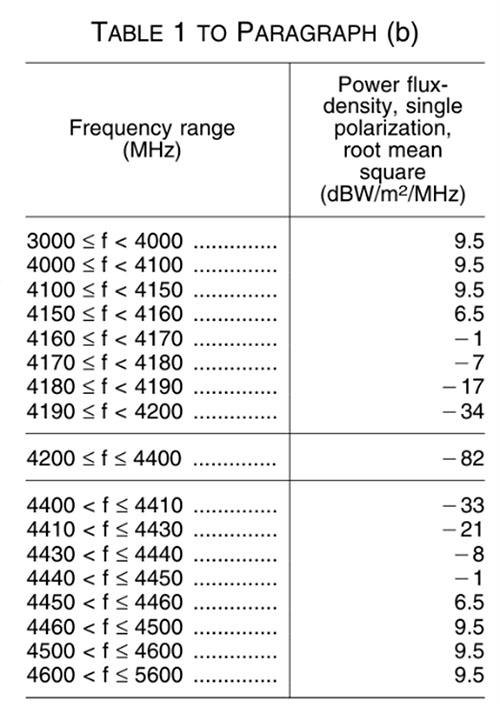
(b) The radio altimeter system must operate at an altitude of 0–500 feet above ground level in the interference environment defined in table 1 of this paragraph:
The FAA has also published Advisory Circular 20-199, Installation of an Airborne Low-Range Radio Altimeter System.
The AC provides guidance for the installation design approval of a radio altimeter system to comply with the new requirements of title 14, Code of Federal Regulations (14 CFR) 91.220(b).
An RA system consists of an RA transceiver, RA antenna(s), coaxial cabling, and display(s) or indicator(s). This AC provides guidance for all the components of the RA system, as well as for the use of the existing RA antenna(s) and display(s) or indicator(s) as part of the RA system installation. This AC includes guidance for system installation and testing to assure proper functioning of the installed RA system, including external radio frequency interference tolerance, as well as proper functioning of integrated avionics and flight control systems that utilize the RA.
What this means for repair stations
Repair stations that install, modify, inspect, or maintain radio altimeter systems should become familiar with the new regulatory requirements and AC 20-199. As operators begin planning for compliance, repair stations will play an important role in supporting equipment upgrades, approved installations, system testing, and continued airworthiness.
Early familiarity with the rule and associated installation guidance will help repair stations better advise customers as they develop long-term compliance plans.
For more information
- 14 CFR §91.220 Radio Altimeter Systems can be found here.
- The FAA final rule can be found here.
- FAA Advisory Circular 20-199 can be found here.
Note: The text of 14 CFR §91.220 won’t appear in the electronic Code of Federal Regulations (eCFR) until the effective date of Sept. 29, 2026.
FOR MORE INFORMATION:
Contact Ric Peri, AEA vice president of government and industry affairs, by email at ricp@aea.net or by phone at 202-589-1144.